God's Hard Words Are Still Good Words
As Ezekiel experienced his vision, the word of judgement ‘tasted as sweet as honey’ in his mouth. The things he would experience in his ministry were terrifying: he’d lose his speech, lose his freedom, lose his wife. Yet he is taught that even God’s hard words are good.
Words to Build Up; Words to Tear Down
I was recently reminded of one of the displays of the Parker Library. One of the cabinets has an original of the Articles of Religion written by Thomas Cranmer. In the same cabinet, however, is the bill for the wood purchased for Cranmer’s burning as an heretic.
What Kind of Evidence?
The Bible is not afraid to give evidence. Faith is not an irrational religious experience in spite of evidence; rather, faith is the common human activity of trusting what we are persuaded is true. And, whether we require little or lots, this usually involves proof.
Faith & Doubt
God’s grace to us is not dependent on how much we trust him but whether we trust him. Perfect or imperfect, the quality of our trust/faith is unimportant, so long as we do trust/believe him. The only alternative is to reject him, after all.
𐄌 Biblical Theology
What Is 'Church'?
It is not unusual for the modern use of a word to be quite removed from the meaning of that word in its biblical context(s). ‘Kingdom’, for instance, in modern use has an emphasis on ‘realm’ while in Scripture the word refers to the ‘reign’ or ‘rule’ of a king.
Faith & Evidence
The Christian faith is not irrational. Despite what atheists like Richard Dawkins would have us believe about our own faith, Christianity is decidedly not belief due to a lack of – or worse, in spite of – the evidence. It's not a leap in the dark.
The Object of Faith Is Key
'That we have ‘faith’ is irrelevant; what we have faith in is everything.' Faith means ‘trust’. If this is the case, then the words ‘faith / belief’ cover far more than ‘religious actions’, as we’ve touched on. And, as an action, it is useless if misplaced.
What Is Faith?
The words ‘faith’ and ‘belief’ that we encounter so often on the pages of Scripture simply mean ‘trust.’ Although they are two distinct words in English, they are both translating a single Greek word, Greek being the original New Testament language.
𐄌 Biblical Theology
What Is Christian Maturity?
The concept of maturity is related to the ideas of perfection, completion, and wholeness. Just as we may speak of mature fruit, so too might we speak of the mature Christian: grown, fully rounded, complete, and whole. Christian maturity is about fruition.
𐄌 Biblical Theology
God Has a Name, and He's Given It to Jesus
I recently saw a table of religions that listed the name of “the divine” in each religion. I was heartened to see it listed God’s name in Judaism as ‘Yahweh’, but I was disappointed (but unsurprised) that Christianity’s name for God was simply listed as ‘God’.
𐄌 Biblical Theology
Christian Disciples
It is important to pause and observe that nowhere in the New Testament are Christians ever described as disciples of a fellow believer. Throughout the Gospels and Acts, ‘disciple’ is used as a term for believers exclusively with relation to Jesus.
Unassuming Love
“The evangelical vision for good works is that they are essentially anonymous. When they do signal their presence, it is often only to the recipient, and they point beyond themselves to the good God we know in Christ.” - Robert Doyle (ex-Moore College)
𐄌 Biblical Theology
Standing on The Shoulders of Giants
The reformed church is always reforming. We don’t stand on giants’ shoulders so we can stomp on them; we stand on their shoulders because they put us there. The effect is to have been given a better view—a view that we ought not be silent about.
𐄌 Biblical Theology
Step Aside (Not Out) So Others Can Step Up (Not In)
It can be very tempting as an elder to just do things yourself; you’re more experienced, more capable, and can get things done quicker. But what happens as time goes on? What are the long-term consequences of this habit, especially when we depart?
𐄌 Biblical Theology
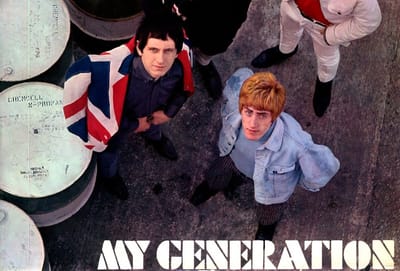
Talkin' 'bout My Generation: Unassuming Generations
There is a model of ‘intergenerational theological decline’, and perhaps you may have heard it: the first generation wins or establishes the gospel in their context, the next generation assumes the gospel, and the third generation loses the gospel.
𐄌 Biblical Theology
Devoted to The Public Reading of Scripture
While we may be devoted to the teaching of Scripture, does the same hold true for our public reading of it? And, if so, what would the evidence of that be? What tangible realities would abundantly display our love and passion for hearing Scripture read out loud?
𐄌 Biblical Theology
Is The Church Still Serious About Heaven?
In this article, I’d like to think through the different, albeit related, realities of ‘heaven’ and the ‘new creation’. I want to whet your appetite to discover more of our present and future reality. I’d like to help you to see this is an essential pillar in any theological framework.
Why Do We Pray for Others?
Learning to pray for others is one of the first things we learn as Christians: we see it commended on every other page of the New Testament; we see it modelled in every other meeting of Christians; and Christian parents model it to their children from birth.